
Dominican history in color, taste and aroma.
The Dominican culture is a product of the interbreeding of races, cuisines, and cultures,
languages, and religions. This "soup", rich in flavors and ingredients, was prepared in the " cauldron
the history of the Caribbean is more than 500 years old. Today we can read the pages
this sometimes cruel and at the same time great story in every Dominican and in
their handiwork...
languages, and religions. This "soup", rich in flavors and ingredients, was prepared in the " cauldron
the history of the Caribbean is more than 500 years old. Today we can read the pages
this sometimes cruel and at the same time great story in every Dominican and in
their handiwork...
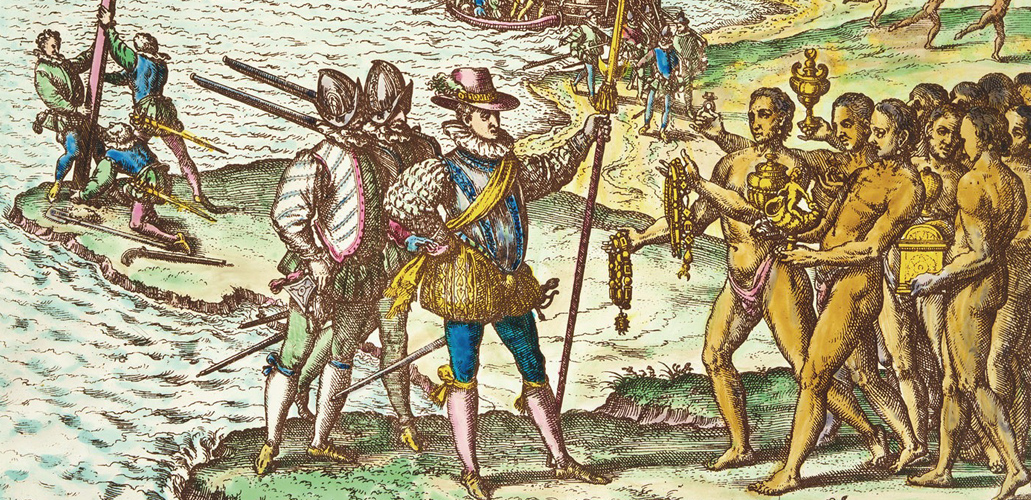
With the discovery of America by Christopher Columbus, the Indian settled population was destroyed, and the island was inhabited by Europeans of all faiths and customs: from Genoese, such as Columbus, to Andalusians, Galicians, Canaries, Basques, Catalans, Florentines, Jews. and the levantines, among many others. It was a stream of people, some of whom "came out as broken and lost losers, and others as fabulously rich gentlemen." Along with European white settlers came black people, representatives of numerous African ethnicities, races and cultures, who came from many coastal areas of Africa, from Senegal, Guinea, the Congo, Angola, and Mozambique. All of them were torn from their original society and oppressed under the weight of the dominant cultures of the new continent. This is another ingredient that is added to the "culinary dish of our history" along with the Iberian culture to continue to make a special seasoning and add new components to this "Creole soup". And if you add to this the successive ethnic migrations to our island of people from the Persian Gulf, the French, the Anglo-Saxons, the Chinese... as well as periodic waves of immigrants: Jews, North Americans, Japanese and even yellow-skinned Mongoloids from Macao, Canton and other areas where the famous middle Kingdom was located.
So, the Dominicans are a wonderful mix of cultures and peoples, which finds its expression in the melodies and rhythms of their songs, sad and cheerful, in works of art and products of hard work, which were watered with the blood and sweat of slaves and peasants.
So, the Dominicans are a wonderful mix of cultures and peoples, which finds its expression in the melodies and rhythms of their songs, sad and cheerful, in works of art and products of hard work, which were watered with the blood and sweat of slaves and peasants.
THE TAINO INDIANS.
The Taino were a pre-Columbian people who inhabited the Bahamas, the Greater Antilles, and the North of the Lesser Antilles on the American continent. It is believed that the Taino Indians are relatives of the arawaks of South America. The Taino culture language is a member of the Arawak language family, which extends from South America to the Caribbean. The Taino Indians are the first inhabitants of the island of Haiti, so they named their promised land "Aichi", which means"Land of Mountains". They were numerous, peaceful, beautiful, and very happy people, who spent their lives quietly and regularly between the cultivation of Yuki and tobacco, hunting and areito – fun and endless festivals. In each boio (this is the name of a typical reminder FOR a TOUR GUIDE: CITY TOUR TAINO GOURMET 4 wooden houses made of wood covered with leaves of the Kana palm), the Indians stored and dried the leaves of tobacco, a sacred and medicinal plant that they brought long ago from the American continent. The fields were sown with root crops such as yuca and yautia, the main food items. The Indians accumulated a large amount of land in areas called "conucos", which improved soil drainage and fertility, as well as delayed soil erosion, allowing longer use of these conucos for crops. Maize was also grown, but the main crop was yuca or manioc, a woody shrub grown for its edible tuberous root and starch. Sweet potatoes or sweet potatoes were an agricultural crop that was also very important to the Taino Indians. They grew pumpkins, beans, pineapples, peanuts, and peppers. Tobacco, pumpkin, and cotton were grown near the houses. Other fruits and vegetables such as palm nuts, guava huiyi and roots, collected in the forest. Taino widely used cotton and palm trees to make fishing nets and ropes. Their canoes (Kanoa) were of various sizes, and could accommodate from 2 to 80 people. Medium-sized canoes could hold 15 to 20 people. They used bows and arrows, and sometimes used poisons for arrowheads. During the wars, they used wooden hammers or sticks, which they called "Makana". The Indians did not know iron.Just like the wheels.- Comments
Loading comments...
We are committed to offering the best-quality replica watches at highly competitive prices. Customers can explore a broad range of fake luxury watches, including Audemars Piguet replicas, uniquely designed Omega replicas, and meticulously crafted Patek Philippe replicas. For more information about replicas, please visit https://www.replicahulk.com